


DJI’s troubles in the US continue, and the company won’t release the Osmo Pocket 4P there, even though it’s launching in other markets. That’s a shame because the Pocket 4P’s second camera adds a meaningful upgrade over the Pocket 4. So what can Americans look forward to instead? While the HOVERAir VERSA’s US availability remains up in the air, the fact that the X1 PRO and X1 PROMAX are listed on HOVERAir’s US store offers some hope.
Assuming you can buy both, which one makes more sense? The DJI Osmo Pocket 4P boasts outstanding imaging hardware, combining a new 1-inch wide-angle sensor, 17 stops of dynamic range, and a 60 mm f/1.8 lens for portraits.
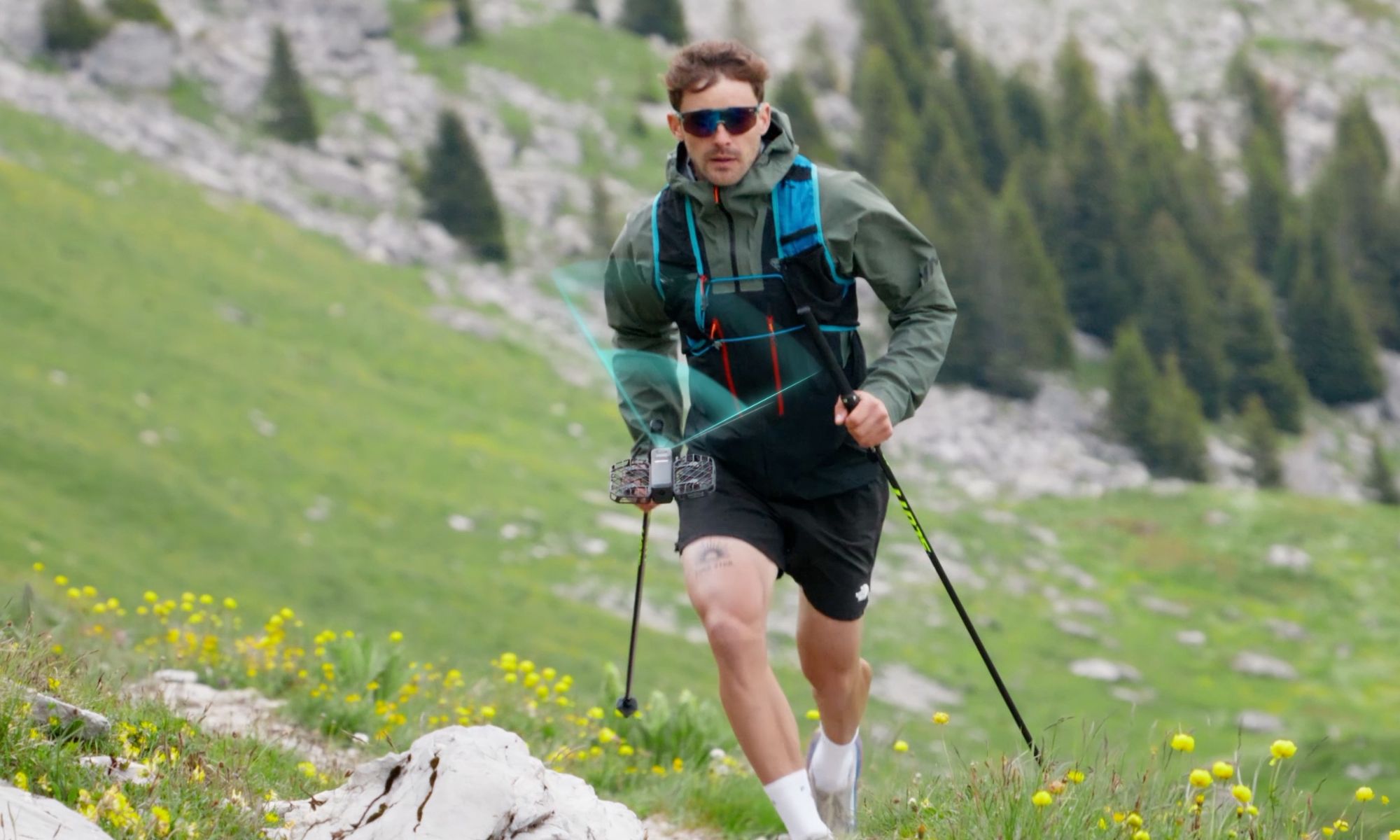
The HOVERAir VERSA counters with something no other camera offers. Clip on a set of propeller wings, and your handheld camera becomes a self-flying drone. If you’ve seen a HOVERAir in action—like the kayaking video I watched early in the morning—you probably know why people are excited. Below, I’ll help you decide whether HOVERAir or DJI is worth the wait.
My quick verdict
Throughout my time at TCF, I’ve watched colleagues help launch plenty of million-dollar crowdfunding campaigns, so you might expect me to be more optimistic about the HOVERAir VERSA. Instead, whether it’s personal preference or simple risk aversion, I’d still recommend the DJI Osmo Pocket 4P to most creators.
The VERSA has an interesting concept, an Indiegogo launch scheduled for mid-August, and not much else. HOVERAir is yet to publish key details like the camera sensor, battery life, or price. So unless you live in the US, where the Pocket 4P isn’t launching, the DJI remains the safer choice.
That doesn’t mean the DJI Osmo Pocket 4P gets everything right. It does a better job than the Pocket 4 when you’re filming people indoors or after dark, but travel vloggers won’t love the extra bulk even when it stays at the hotel during a sunrise walk through Santorini’s streets. I’d pick the HOVERAir VERSA instead if your work involves getting creative angles, if packing light matters more than pixel-peeping, and if you’re comfortable taking a chance on a product that hasn’t reached customers yet. Still, I can’t deny the appeal of using it for a shot of me and my brother quad biking through Hurghada, Egypt, from a perspective no handheld camera could capture.
Imaging you can verify today
The gap here has less to do with quality and more to do with certainty. DJI has published the Pocket 4P’s numbers down to the awkward ones, including a new 1-inch CMOS on the wide lens, LOFIC-assisted dynamic range of 17 stops in D-Log 2, a 1/1.28-inch sensor behind the 60 mm lens rated at 14 stops, and 10-bit capture.
HOVERAir doesn’t go into the same level of detail. The company talks about an “industry-leading” image processor and clean low-light footage without naming a sensor size or a bit depth anywhere on the VERSA page.
When companies leave sensor details out at an announcement, it often means the sensor isn’t the main selling point, and HOVERAir’s own history backs that up. The original X1 shipped a 2.7K camera in a 125-gram body, and the PROMAX reached 8K with 10-bit HLG and H-Log, so HOVERAir can build a competent camera when it chooses to.
The angles each one can reach
Reach is where the VERSA stops being a novelty. A gimbal camera gives you smooth movement at arm’s length, and no amount of stabilization gets you a rising shot over a ridge line or a top-down of your own campsite. Snapping the wings on gives you an aerial cinematographer with over 10 automated flight modes, hand launch, no controller and no piloting experience, plus a 3D Worlds mode that flies a 360-degree circle and reconstructs the scene as a three-dimensional image you can spin on any screen.
DJI’s answer to reach is optical, not vertical. The 60mm lens covers 3x optical zoom and up to 12x combined, with ActiveTrack 8.0 following people, pets, vehicles and objects across the whole zoom range. Compressed backgrounds and tight close-ups are useful, though they still come from wherever your feet happen to be.
The best camera is the one you don’t leave behind
Weight and friction decide which camera comes out of the bag. I learned that the hard way on hikes. I already pack everything I need for the trail, including 2 liters of water and a small headlamp, which pushes my backpack close to 30 pounds. The climbs get rough, but I still refuse to leave better camera gear behind just to save a few ounces.
That makes the Pocket 4P’s design easier to appreciate. It weighs 230 grams, turns on when you rotate the touch screen, includes 103 GB of built-in storage so a memory card is optional, and lasts up to 210 minutes on a charge with an 18-minute boost to 80%. Gesture controls also help when you’re filming alone. An open palm starts ActiveTrack, while a V sign begins recording without needing to touch the camera.
The HOVERAir VERSA adds a new shooting angle, but that flexibility comes with more to carry. Even when you use it as a handheld camera, you’re still carrying hardware built for flight, including the wings that stay in your bag on days when you never launch it. Battery life, weight, and charging times remain unknown, leaving more questions for buyers.
The difference between carrying a camera and launching one
I’ve been following drones for a while now as a casual hobbyist. What stops me from adding the latest and greatest drone to my cart isn’t the hardware — it’s the extra hassle that comes with flying one. There’s a level of gatekeeping around drones because using one means dealing with registration rules, restricted areas, and steps you never consider with a handheld gimbal camera.
Community chatter suggests the VERSA weighs less than 250 grams, which means recreational pilots in the United States don’t need to register it, while EU pilots and users in several other regions still face registration requirements (that’s bad news for my brother).
Nobody stops you filming with a gimbal camera indoors, on a train platform, at a gig or inside a museum. Every angle the Pocket 4P offers works in all those places on a Tuesday afternoon with no notice, no app check and no airspace map. On legal and practical freedom to shoot, the Pocket 4P wins, and the VERSA’s aerial half is only as valuable as the places you can legally deploy it.
Buying either one right now
The Pocket 4P launched worldwide after its May 2026 reveal in Cannes, France, but US buyers are left out, watching a finished product they cannot purchase. Pricing remains a mystery, too, so take any figure you see online with a grain of salt until we’ve an update from DJI.
HOVERAir says the VERSA goes to Indiegogo in mid-August 2026 with pricing and the complete spec sheet still unannounced as of August. And, don’t forget that crowdfunding a first-generation device in a category nobody has shipped before carries obvious risks.
Where the DJI Osmo Pocket 4P wins
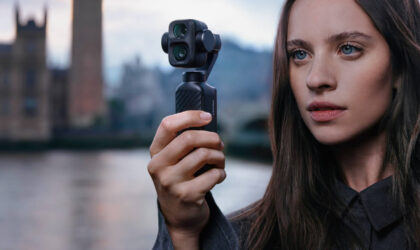
DJI Osmo Pocket 4P
May be out of stock.
Buy the Pocket 4P when the footage has to be good enough to grade. Creators shooting talking-head content, interviews, travel vlogs and portrait work get a 60 mm f/1.8 lens with natural bokeh, in-camera Beautify, six film tones and D-Log 2 at 10-bit, which gives a colorist room to work rather than a file to rescue.
It also suits the person who shoots most often indoors and after dark. 17 stops of dynamic range, a Fill Light accessory and a low-light mode built for neon and blue hour cover the scenarios where small sensors usually fall apart.
Add 4K/240 FPS slow motion, 37 MP stills, timecode drift held inside one frame across eight hours and an accessory range that includes ND filters, a wireless mic and a battery handle, and you have a camera that slots into paid work rather than idling next to it.
Where the HOVERAir VERSA wins
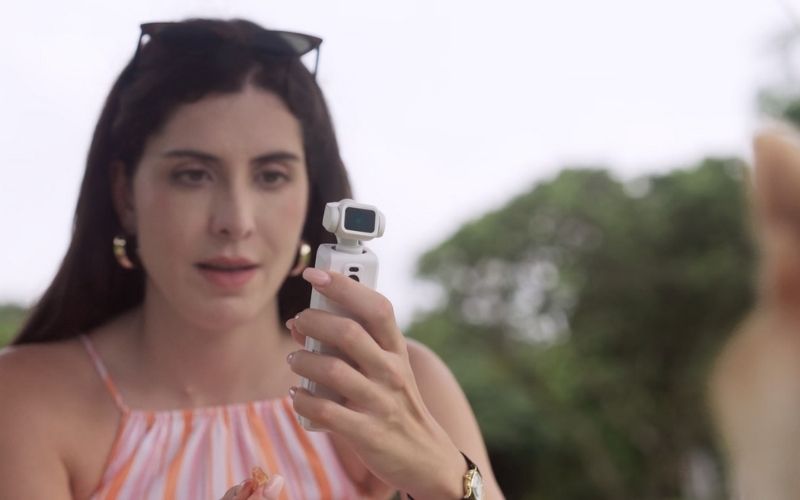
Do you keep writing shots into your plan that you cannot physically stand there to capture? The HOVERAir VERSA follows solo travelers, cyclists, hikers, and van-lifers from the air and works at arm’s length, which is a lot easier than carrying a Pocket-style camera and a separate drone.
It also makes sense if you hate dealing with gear. You launch it from your palm, skip the controller, and let the AI handle the tracking. That matters because framing yourself while moving is usually the annoying part. The VERSA takes away the “where do I put the camera?” problem before you even start filming.
3D Worlds is the odd one out. A single 360-degree pass turns a photo into a space a viewer can spin on their phone, which is a share format rather than a spec, and nothing with a handle on it does that. Whether people care in six months is something we’ve got to wait and find out.
My final verdict
The 60 mm settles it. Most weeks my camera is pointed at a gadget on a desk or at one of my cats who (except for Lucy) won’t hold still, and a 3x lens at f/1.8 was built for exactly those two jobs. Zoom past 6x, the beautify sliders, the timecode, I’ll never open any of them.
The HOVERAir VERSA makes more sense when aerial footage matters more than certainty, and you’re willing to back a crowdfunding product before all the details are available. Back it only when aerial footage is the entire reason you’re buying, because otherwise you’re paying for propeller wings that live in your bag between the two afternoons a year you’re legally allowed to launch them.
Related: DJI Mini 5 Pro vs. DJI Mini 4 Pro