

No matter how good you are as a trader and how great your trading strategy is performing, sooner or later, you will experience losing trades. What separates the professional from the amateur trader is how well he can handle losses.
In this context, one of the most significant hurdles for traders is learning to discern between unavoidable losses and costly, preventable mistakes. This distinction is so important for building a resilient trading mindset and long-term success.
I recorded a podcast about this very topic which you can find here:
1. The Nature of Trading Losses: Good vs. Bad
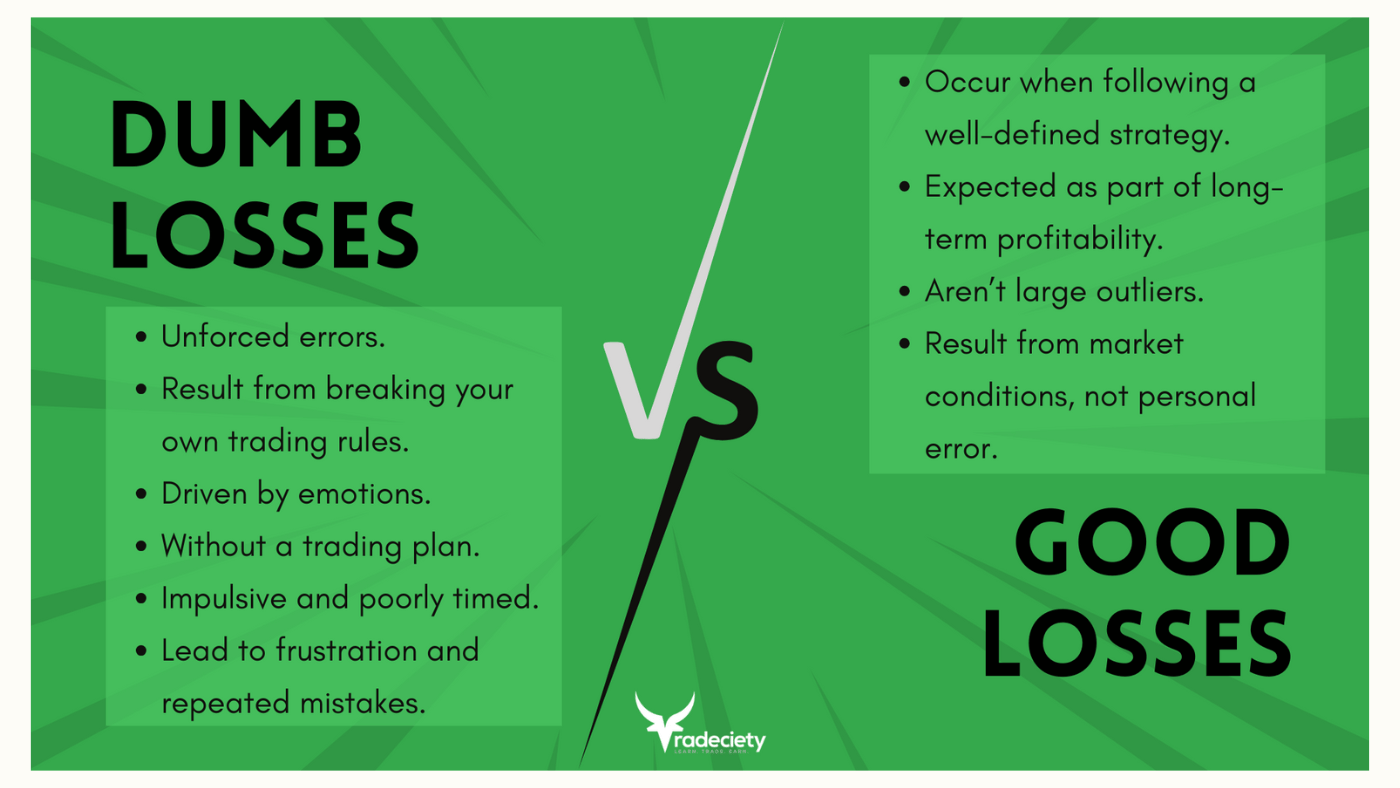
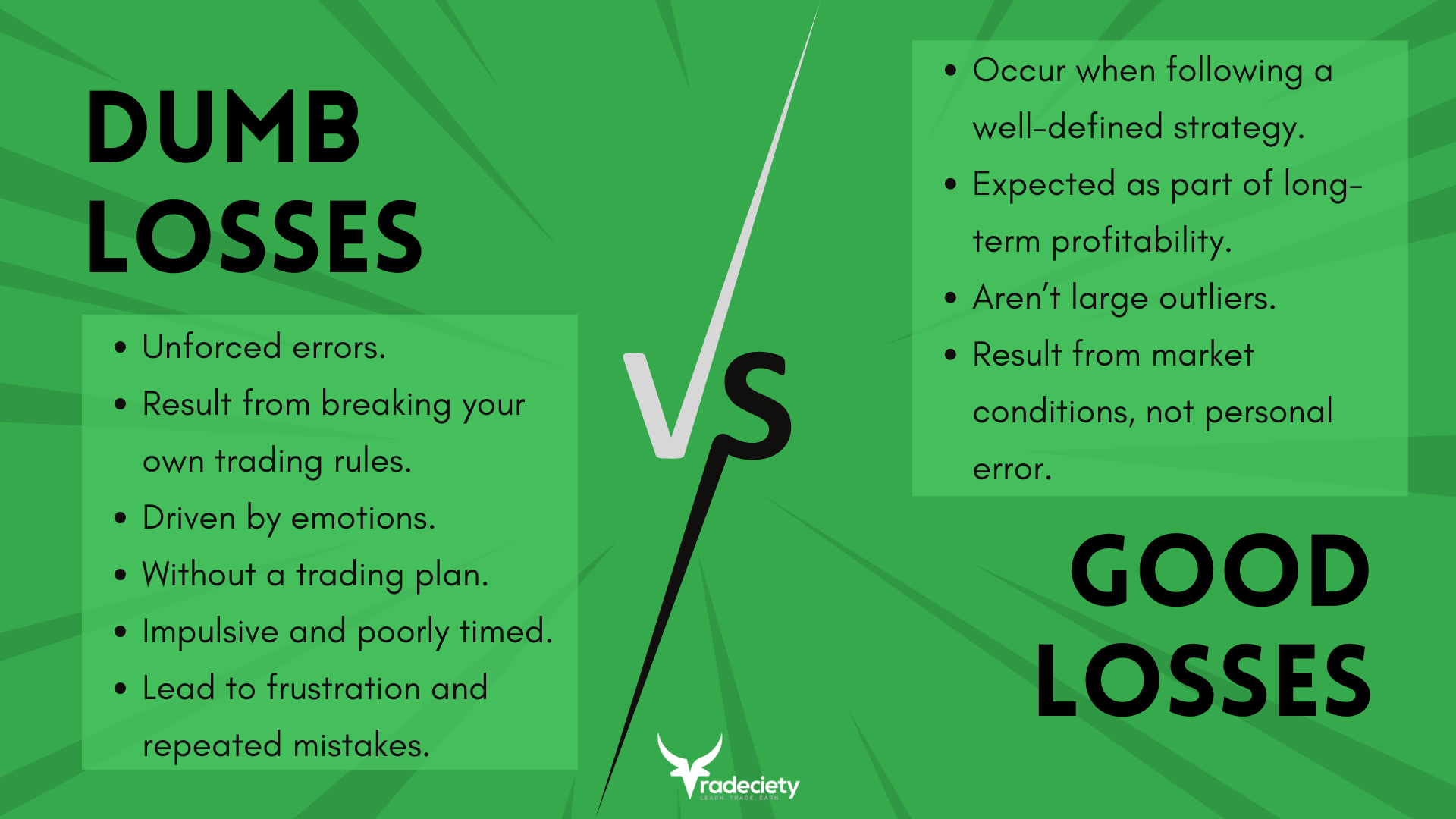
Every trader will face losses – it’s simply part of the game. However, not all losses are equal. Distinguishing between “good losses” and “dumb losses” can transform how you perceive and learn from setbacks.
Good Losses: A Part of the Plan
Good losses occur when you adhere to your trading strategy and follow your rules, but market conditions don’t favor you. These losses are expected, even in a solid trading system. Over time, these “good losses” don’t impede profitability but are part of a larger, successful approach.
Tip: If you’re new to trading, one of the best ways to become comfortable with the inevitability of good losses is to backtest your strategy. Spend a few weekends gathering data from various markets. This practice will reveal that you can lose 50% of your trades and still remain profitable in the long term. This realization can be an eye-opener and provide confidence in sticking to your strategy during tough times.
Dumb Losses: The Cost of Error
Dumb losses are preventable and occur when you deviate from your trading plan. These can result from emotional trading, entering without a clear plan, or ignoring your established risk management rules. Recognizing and minimizing these errors can help protect your capital and keep you on the path to steady growth.
2. The Process-Oriented Mindset
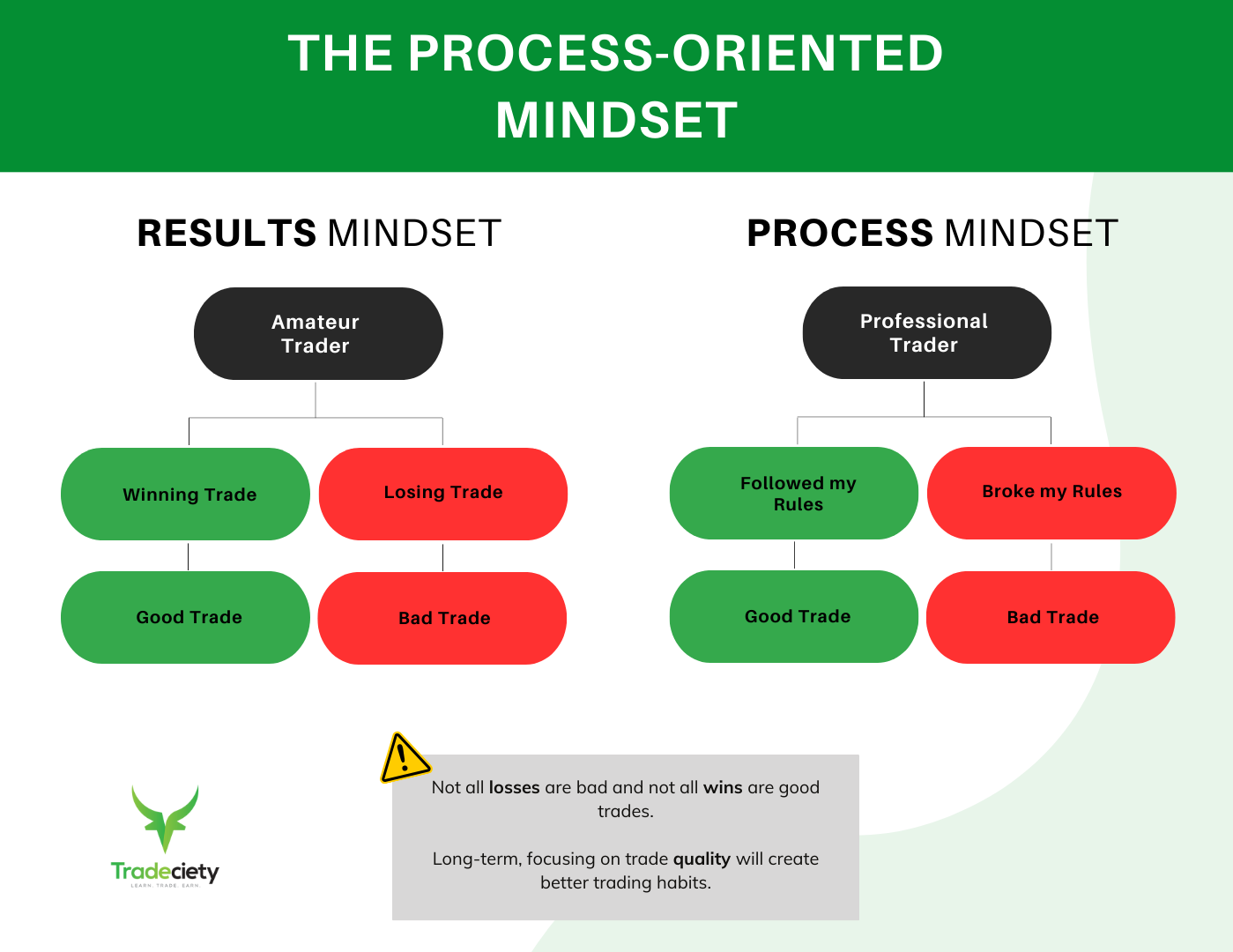
Instead of evaluating success purely by profit and loss, a process-oriented trader measures performance by adherence to their trading plan. Did you follow your entry and exit strategy? Were your trade sizes and timing appropriate? This perspective helps you maintain consistency, refine your approach, and avoid burnout.
Reflect and Review: After each trade, especially the losing ones, reflect on these questions:
-
Did I follow my trading rules?
-
Was the trade pre-planned or impulsive?
-
Were there hidden influences at play, such as stress or market hype?
This reflective practice helps you spot behavioral patterns, such as fear of missing out (FOMO) or revenge trading, keeping you accountable and disciplined.
3. Weekly Improvement
One effective method for growth is to identify one key area to improve each week. For instance, if you notice a habit of overtrading when bored, write it down and place a reminder next to your trading screen. Make it your mission for the next week not to repeat that behavior. Over time, these small, targeted adjustments can lead to significant progress.
4. Avoiding Arbitrary Return Goals
Setting rigid financial goals like “I need to make 10% this month” can put undue pressure on you to force trades that aren’t aligned with market conditions. Unlike a 9-5 job, trading requires flexibility and adaptability. The market dictates opportunities, not your calendar.
Best Practice: Focus on taking quality trades as they come, rather than trying to hit arbitrary targets. This reduces forced decisions and allows you to remain aligned with your strategy.
5. The Value of Stepping Away
A common mistake among traders is the urge to constantly be in a trade, even if there isn’t a solid setup. This often leads to unnecessary and impulsive trades. Knowing when to step back and take a break can be just as important as entering a trade. Breaks help clear your mind, reset your strategy, and improve discipline.
Signs It’s Time for a Break:
6. Recognizing and Mitigating Excessive Risk
Sometimes, traders take outsized risks due to overconfidence or a desire to recover quickly from losses. This behavior can be destructive and counterproductive to long-term success. If you notice yourself taking bigger risks than usual, pause and reflect on the underlying motivation. Are you trying to “catch up” after a bad streak, or feeling pressured by market or social factors?
Adjustment Strategy:
Actionable Takeaways for Every Trader
To wrap up, here are six steps to integrate into your trading routine today:
-
Differentiate losses: Understand and accept “good losses,” but strive to minimize dumb ones.
-
Adopt a process-oriented approach: Focus on executing your strategy well, not just the outcome.
-
Reflect regularly: Analyze your trades in your trading journal to spot patterns and areas for improvement.
-
Avoid rigid profit targets: Take what the market offers and don’t force trades.
-
Control external influences: Only incorporate tips that align with your strategy.
-
Mitigate excessive risk: Have a position size plan ready that tells you how much to risk per trade.