



Tehran is fighting a new price signal in public
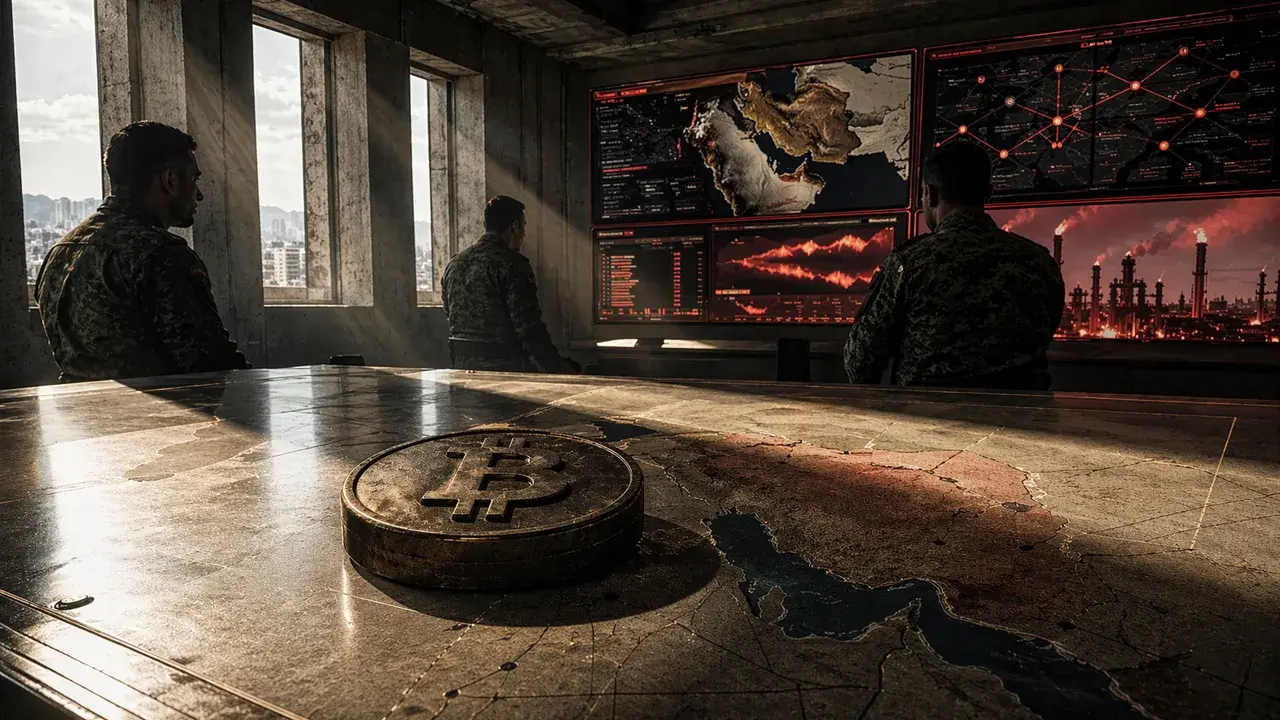
Mohammad Bagher Ghalibaf chose a strange phrase for a dangerous moment. In the middle of a live crisis around the Strait of Hormuz, Iran’s parliament speaker mocked “vibe-trading digital oil” and took a swipe at US Treasuries as well, turning a market argument into part of a wartime message campaign.
The immediate surface read is easy enough. A senior Iranian official wanted to ridicule speculative pricing and frame physical oil as the real thing.
The deeper significance sits somewhere else. A state actor in the middle of a regional conflict is now speaking directly to the way risk is being priced on crypto-native rails.
That shift deserves more attention than the phrasing itself. Oil has always carried military weight, inflation risk, and political leverage.
What changed over the past several weeks is the venue through which some of that risk gets expressed first. As CryptoSlate documented in late March, the market for 24/7 oil exposure accelerated as geopolitical shocks kept landing outside the operating hours of traditional exchanges.
The world does not pause on weekends, so traders increasingly want a venue that stays open when the old infrastructure is dark.
The Iran angle carries more force than a generic crossover between geopolitics and crypto. Tehran is no longer talking about crypto as a sanctions story, a payments workaround, or a symbolic side channel.
It is reacting to a market function. When a public official in a war zone starts arguing about “digital oil,” the implication is that these synthetic and crypto-linked instruments have become visible enough to enter the information battle around price itself.
The timing carries extra significance because the Strait of Hormuz remains one of the world’s most important chokepoints. The International Energy Agency says around 20 million barrels per day moved through the strait in 2025, about a quarter of the world’s seaborne oil trade.
The US Energy Information Administration says flows through Hormuz accounted for more than one quarter of global seaborne oil trade and about one-fifth of oil and petroleum product consumption, alongside around one-fifth of global LNG trade.
Those numbers pull the issue out of crypto-native abstraction very quickly. A disruption there can bleed into fuel prices, shipping costs, inflation expectations, central-bank bets, and broader market stress.
Ghalibaf has already been leaning into market language throughout this conflict. Last week, after Washington tightened pressure around Hormuz, he warned that Americans would grow “nostalgic” for cheaper gasoline.
CryptoSlate also reported that Iran had floated Bitcoin-denominated payments for tanker passage, pulling BTC directly into a coercive chokepoint debate. Today’s attack on “digital oil” extends that pattern.
Tehran is speaking in the language of price, and that reveals something important on its own. Crypto has moved closer to the front edge of global market signaling during conflict, and public officials can see it.
The market that stays open during war weekends is starting to shape the first reaction
The central mechanism here is simple and powerful. Legacy oil markets still have defined hours, established benchmarks, and deeper institutional roots.
Conflict does not respect those hours. Missiles, naval warnings, tanker disruptions, and diplomatic breakdowns tend to land whenever they land.
That leaves a gap between the moment risk arrives and the moment conventional venues fully reopen. Crypto-native derivatives platforms have spent the past few months filling that gap.
The strongest example has been Hyperliquid. In March, Bloomberg reported that an oil-linked perpetual contract on the platform generated more than $1.2 billion in 24-hour volume as Middle East tensions intensified.
CryptoSlate later noted that wartime oil trading helped push HYPE into the crypto top 10, with the token gaining a second channel of demand as traders used the venue to express oil views around the clock.
Hyperliquid’s oil-linked contracts have become a live venue for traders who want exposure before mainstream markets come back online.
Crypto did not suddenly take over the global oil price. Brent, WTI, physical barrels, and legacy futures venues still anchor the market.
What crypto venues are beginning to influence is the first tradable reaction when the old system is shut. In fast markets, that first reaction can carry real weight.
It shapes sentiment, frames expectations, and gives traders a reference point before more established benchmarks catch up. During an active conflict, first-reaction pricing can become the first draft of the broader macro move.
That is why Ghalibaf’s language stands out. He appears to be dismissing a pricing mechanism because that mechanism has become inconvenient.
Physical oil still rules the real economy, while synthetic and crypto-linked oil markets now help translate fear, scarcity, and military risk into a visible price before dawn in New York and before London is fully engaged.
Once that translation begins, the move can travel. The people trading those contracts are reacting to the same geopolitical stress that will later hit energy desks, rate markets, and equity futures.
The broader backdrop reinforces the tension. The market structure around 24/7 trading is expanding beyond crypto itself.
In late March, Wintermute launched a round-the-clock crude product through OTC channels. The same report pointed to a broader migration across finance, with tokenized equities, extended-hours settlement, and new 24-hour trading pushes gathering momentum.
Once that architecture spreads, the distinction between “crypto market” and “macro market after hours” starts to thin out.
Two paths now sit in front of the market, and both carry weight. One path leads to persistence.
If traders keep using crypto rails during geopolitical shocks, platforms built for continuous trading gain a durable foothold in macro price discovery. The other path leads to retrenchment.
If the conflict cools and volume collapses back to pre-crisis levels, the past several weeks still stand as proof points of what opens up when the legacy clock fails. Either way, the old assumption that oil, war, and macro risk belong to one world while crypto belongs to another looks weaker than it did a month ago.
Bitcoin still sits inside the same chain reaction, even when Hyperliquid carries the cleaner direct exposure
Bitcoin enters this picture through consequence rather than analogy. BTC is one step removed from the direct oil trade and sits one layer downstream, where oil shocks feed inflation anxiety, rate repricing, and broader risk appetite.
That chain comes into focus because the latest energy data already shows the conflict hitting the real economy. In its April Oil Market Report, the IEA said global oil demand is now expected to contract by 80,000 barrels a day this year, a dramatic reversal from the growth outlook it carried just a month earlier.
The agency also said global oil supply plunged by 10.1 million barrels a day to 97 million barrels a day in March, calling the disruption tied to attacks on energy infrastructure and restrictions through Hormuz the largest in history.
Those numbers reach far beyond energy desks. Higher oil prices can harden inflation pressure.
Harder inflation pressure can delay or dilute expectations for easier monetary policy. That is the bridge back to Bitcoin.
When markets push rate cuts further out, the effect often spills over to speculative and duration-sensitive assets as well. Traders can track that chain in real time through the CME FedWatch tool, where rate expectations shift as inflation risk and macro stress evolve.
That dynamic helps explain why Bitcoin can attract attention during geopolitical chaos while still trading like a risk asset when the oil impulse grows too strong. According to CryptoSlate’s latest BTC market data, Bitcoin changed hands at about $75,219 on April 20, up 0.19% over 24 hours, up 6.22% over seven days, and up 6.51% over 30 days.
Those numbers show resilience. They also show that BTC is trading inside a larger macro frame rather than floating above it.
There is a reason the cleaner direct market expression of this specific wartime shift has been Hyperliquid rather than Bitcoin itself. CryptoSlate’s latest HYPE data shows the token at around $40.87, down 5.60% on the day, down 1.81% over seven days, and still up 3.26% over 30 days.
That profile looks less like a simple fear trade and more like a venue trade, a bet that continuous access to macro risk has become a business in its own right.
The most human part of the whole picture remains easy to miss. Most people will never trade an oil perpetual contract on a crypto platform.
They will still feel the consequences if wartime risk keeps lifting energy prices, tightening supply chains, and forcing central banks into a harder posture. That is why Ghalibaf’s broadside carries more bite than it first appears to.
He is arguing about price formation because price formation is where conflict turns into lived cost. In that sense, the clash over “digital oil” is a clash over who gets to shape the first market answer when the world jolts after hours.
If this pattern holds, crypto’s next phase may look less like an isolated parallel economy and more like an overnight extension of global finance, especially in moments when old systems are closed, and the pressure is highest.
If the pattern fades, the last several weeks still offered a revealing preview. A live military crisis pushed oil speculation onto crypto rails; Iran responded by attacking the legitimacy of “digital oil” in public, and Bitcoin found itself caught in the same chain reaction that runs from conflict to crude to inflation to risk.
That is a very different place for crypto to stand than the one it occupied a few cycles ago.