

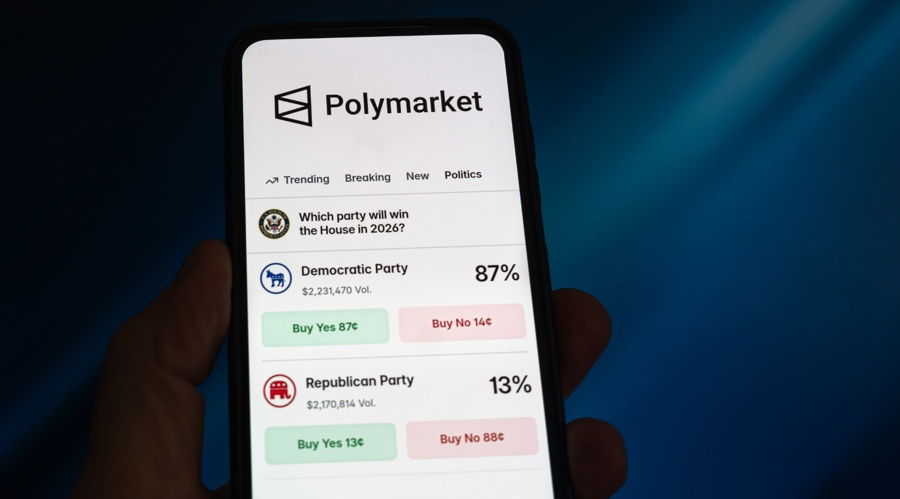
Prediction markets spent the week facing a familiar mix of growth and resistance.
A dispute over Polymarket’s Iran market reignited questions about how event contracts should be settled. A coalition of 56 organizations asked Congress to curb the industry’s expansion. At the same time, Canada moved in the opposite direction, preparing to open prediction markets to retail investors through a regulated financial platform.
Polymarket’s Settlement Problem Returns
Polymarket’s Iran peace-deal market has turned into another dispute over how the platform resolves ambiguous real-world events.
The contracts tied to a US-Iran peace deal have processed more than $345 million in volume, but traders remain split over whether the announced agreement meets the market’s requirement for a “permanent peace deal.”
The dispute now turns on contract wording, official statements, and whether a temporary arrangement can qualify as a lasting end to hostilities.
This is not Polymarket’s first resolution fight. Other high-profile disputes included Ukraine’s proposed Trump mineral deal, where traders argued over whether indirect signals could satisfy a contract that pointed to official confirmation, and Venezuela’s 2024 election market, where UMA voters resolved the outcome against the official result after relying on alternative reporting.
That is a recurring weakness for prediction markets covering geopolitics, regulation and public policy. They can aggregate expectations quickly, but settlement becomes harder when the outcome depends on interpretation rather than a clearly verifiable event.
A 56-Group Coalition Wants Congress to Stop Prediction Markets
Opposition to prediction markets is becoming more organized.
This week, a coalition of 56 organizations sent a letter to U.S. senators urging them to use pending crypto legislation to explicitly prohibit event contracts tied to sports and casino-style gambling.
The signatories include gaming industry groups, tribal gaming associations, labor unions, and chambers of commerce — an unusual alliance united by concerns over the rapid expansion of prediction markets.
We commend the filing of an amicus brief by a biparisan coalition of 40 state AGs supporting Ohio and Tennesse’s right to defend their states’ authority and protect consumers from “prediction markets” offering sports betting.https://t.co/YKZXtKILe6
— American Gaming Association (@AmericanGaming) June 18, 2026
The groups argue that prediction market platforms are effectively creating a nationwide sports betting market under a financial-services framework, bypassing state and tribal gambling systems.
They also contend that the CFTC lacks the expertise and infrastructure needed to oversee what they view as gambling activity.
The letter marks an escalation from criticism by individual companies or trade associations.
Opponents are now attempting to influence federal legislation, reflecting a broader effort to challenge the CFTC’s authority over event contracts and prevent prediction markets from expanding further under the derivatives framework
Wealthsimple Brings Prediction Markets to Canada
Canada’s Wealthsimple is preparing to launch prediction markets through a partnership with Kalshi, becoming one of the first financial firms to offer event contracts to Canadian investors.
Coming this summer: Wealthsimple Predict, our new prediction markets app for trading outcomes on real-world events. Sign up to be notified when it’s available to download.https://t.co/r7fD9jxjrP
— Wealthsimple (@Wealthsimple) June 18, 2026
The company received regulatory approval earlier this year and plans to offer markets tied to economic indicators, financial markets, and climate data.
The launch comes as regulators in other countries move in the opposite direction. In recent weeks, Spain, India, and Indonesia have joined a growing list of jurisdictions seeking to restrict access to Kalshi and Polymarket.
Those restrictions have proven difficult to enforce. Indian authorities recently acknowledged that users were still accessing blocked platforms through virtual private networks, while cryptocurrencies make it easier to move funds outside traditional financial channels.
The contrast highlights the uneven global response to prediction markets. Some regulators are trying to keep them out. Others are beginning to integrate them into regulated financial infrastructure.
Number of the Week
Kalshi crossed $100 billion in lifetime notional volume as World Cup markets pushed prediction market activity to new highs.
The platform also recorded $6.38 billion in weekly notional volume for the week ending June 14, up from $4.46 billion a week earlier. Sports contracts are now the clearest driver of the sector’s current growth.
Bottom Line
This week highlighted three challenges prediction markets continue to face as they grow.
The first is settlement. Markets can aggregate expectations efficiently, but disputed outcomes remain difficult to resolve when contracts depend on interpretation rather than clearly verifiable events.
The second is political opposition. The coalition letter shows that resistance to prediction markets is becoming more coordinated and increasingly focused on federal legislation.
The third is regulation itself. While some governments are trying to restrict access, others are beginning to integrate prediction markets into regulated financial infrastructure.
At the same time, Kalshi crossed $100 billion in lifetime volume. Whatever direction regulators ultimately take, the market is already operating at a scale.
Prediction markets spent the week facing a familiar mix of growth and resistance.
A dispute over Polymarket’s Iran market reignited questions about how event contracts should be settled. A coalition of 56 organizations asked Congress to curb the industry’s expansion. At the same time, Canada moved in the opposite direction, preparing to open prediction markets to retail investors through a regulated financial platform.
Polymarket’s Settlement Problem Returns
Polymarket’s Iran peace-deal market has turned into another dispute over how the platform resolves ambiguous real-world events.
The contracts tied to a US-Iran peace deal have processed more than $345 million in volume, but traders remain split over whether the announced agreement meets the market’s requirement for a “permanent peace deal.”
The dispute now turns on contract wording, official statements, and whether a temporary arrangement can qualify as a lasting end to hostilities.
This is not Polymarket’s first resolution fight. Other high-profile disputes included Ukraine’s proposed Trump mineral deal, where traders argued over whether indirect signals could satisfy a contract that pointed to official confirmation, and Venezuela’s 2024 election market, where UMA voters resolved the outcome against the official result after relying on alternative reporting.
That is a recurring weakness for prediction markets covering geopolitics, regulation and public policy. They can aggregate expectations quickly, but settlement becomes harder when the outcome depends on interpretation rather than a clearly verifiable event.
A 56-Group Coalition Wants Congress to Stop Prediction Markets
Opposition to prediction markets is becoming more organized.
This week, a coalition of 56 organizations sent a letter to U.S. senators urging them to use pending crypto legislation to explicitly prohibit event contracts tied to sports and casino-style gambling.
The signatories include gaming industry groups, tribal gaming associations, labor unions, and chambers of commerce — an unusual alliance united by concerns over the rapid expansion of prediction markets.
We commend the filing of an amicus brief by a biparisan coalition of 40 state AGs supporting Ohio and Tennesse’s right to defend their states’ authority and protect consumers from “prediction markets” offering sports betting.https://t.co/YKZXtKILe6
— American Gaming Association (@AmericanGaming) June 18, 2026
The groups argue that prediction market platforms are effectively creating a nationwide sports betting market under a financial-services framework, bypassing state and tribal gambling systems.
They also contend that the CFTC lacks the expertise and infrastructure needed to oversee what they view as gambling activity.
The letter marks an escalation from criticism by individual companies or trade associations.
Opponents are now attempting to influence federal legislation, reflecting a broader effort to challenge the CFTC’s authority over event contracts and prevent prediction markets from expanding further under the derivatives framework
Wealthsimple Brings Prediction Markets to Canada
Canada’s Wealthsimple is preparing to launch prediction markets through a partnership with Kalshi, becoming one of the first financial firms to offer event contracts to Canadian investors.
Coming this summer: Wealthsimple Predict, our new prediction markets app for trading outcomes on real-world events. Sign up to be notified when it’s available to download.https://t.co/r7fD9jxjrP
— Wealthsimple (@Wealthsimple) June 18, 2026
The company received regulatory approval earlier this year and plans to offer markets tied to economic indicators, financial markets, and climate data.
The launch comes as regulators in other countries move in the opposite direction. In recent weeks, Spain, India, and Indonesia have joined a growing list of jurisdictions seeking to restrict access to Kalshi and Polymarket.
Those restrictions have proven difficult to enforce. Indian authorities recently acknowledged that users were still accessing blocked platforms through virtual private networks, while cryptocurrencies make it easier to move funds outside traditional financial channels.
The contrast highlights the uneven global response to prediction markets. Some regulators are trying to keep them out. Others are beginning to integrate them into regulated financial infrastructure.
Number of the Week
Kalshi crossed $100 billion in lifetime notional volume as World Cup markets pushed prediction market activity to new highs.
The platform also recorded $6.38 billion in weekly notional volume for the week ending June 14, up from $4.46 billion a week earlier. Sports contracts are now the clearest driver of the sector’s current growth.
Bottom Line
This week highlighted three challenges prediction markets continue to face as they grow.
The first is settlement. Markets can aggregate expectations efficiently, but disputed outcomes remain difficult to resolve when contracts depend on interpretation rather than clearly verifiable events.
The second is political opposition. The coalition letter shows that resistance to prediction markets is becoming more coordinated and increasingly focused on federal legislation.
The third is regulation itself. While some governments are trying to restrict access, others are beginning to integrate prediction markets into regulated financial infrastructure.
At the same time, Kalshi crossed $100 billion in lifetime volume. Whatever direction regulators ultimately take, the market is already operating at a scale.