

I’ve always thought of screenless fitness trackers as the healthy anecdote to smartwatch overload—the kind of device you wear when you want the metrics, but not the noise. So when earlier Garmin Cirqa leaks started circulating online, I assumed it was just another entry in the growing list of “coming soon” screenless wearables we’ve been seeing lately.
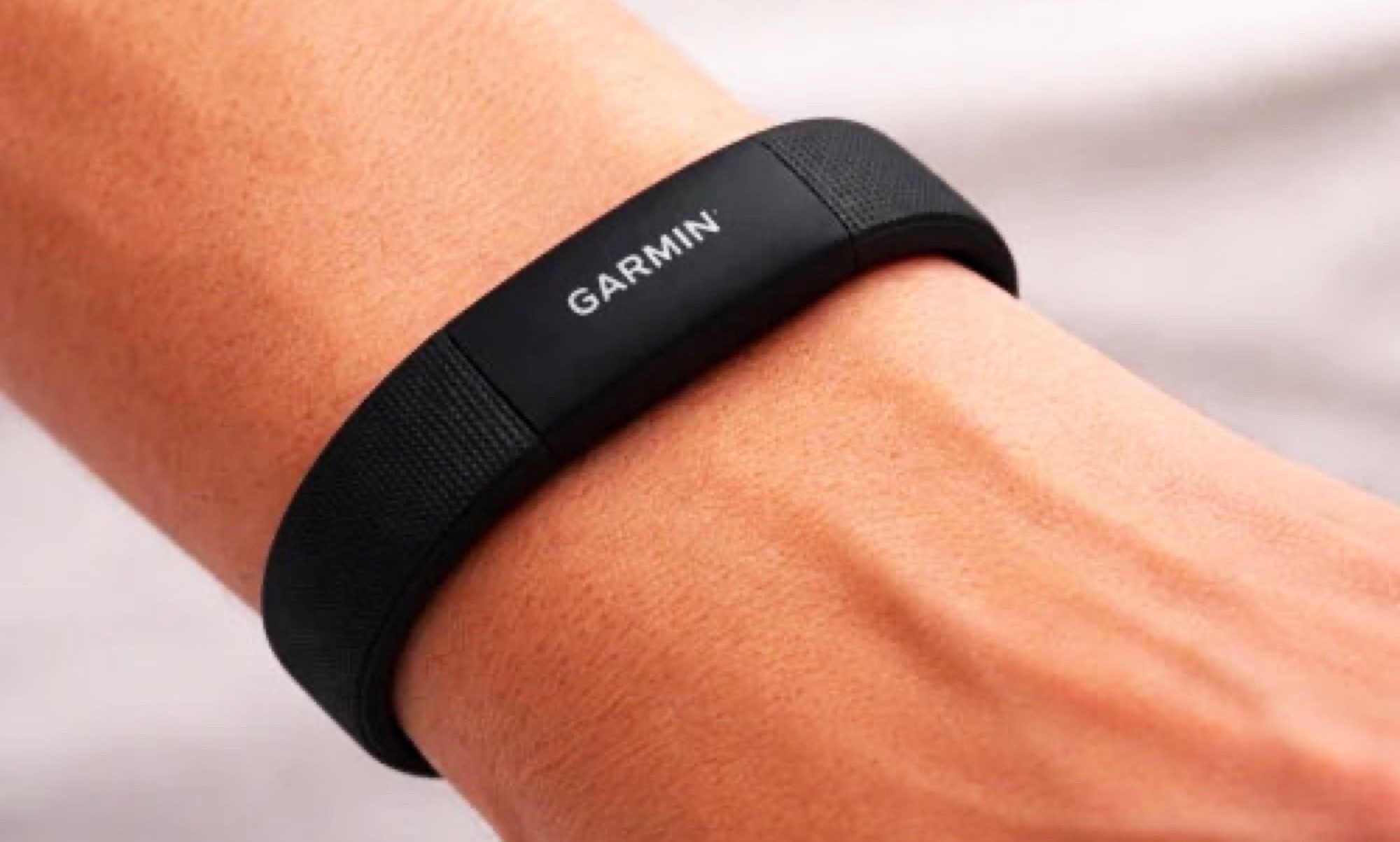
At first glance, the Garmin Cirqa leak looks exactly like what you’d expect from Garmin entering this space: a minimal, screen-free wearable focused on continuous health tracking. Heart rate, sleep, activity —all the usual passive metrics, without the display.
But then the price detail landed.
At around $510, Garmin’s rumored screenless fitness band is potentially becoming the most expensive entry in the screenless tracker category. in it. Suddenly, ‘simplicity’ doesn’t feel like the right word anymore.
What the Latest Garmin Cirqa Leaks Actually Tells Us
Let’s get our bearings for a second.
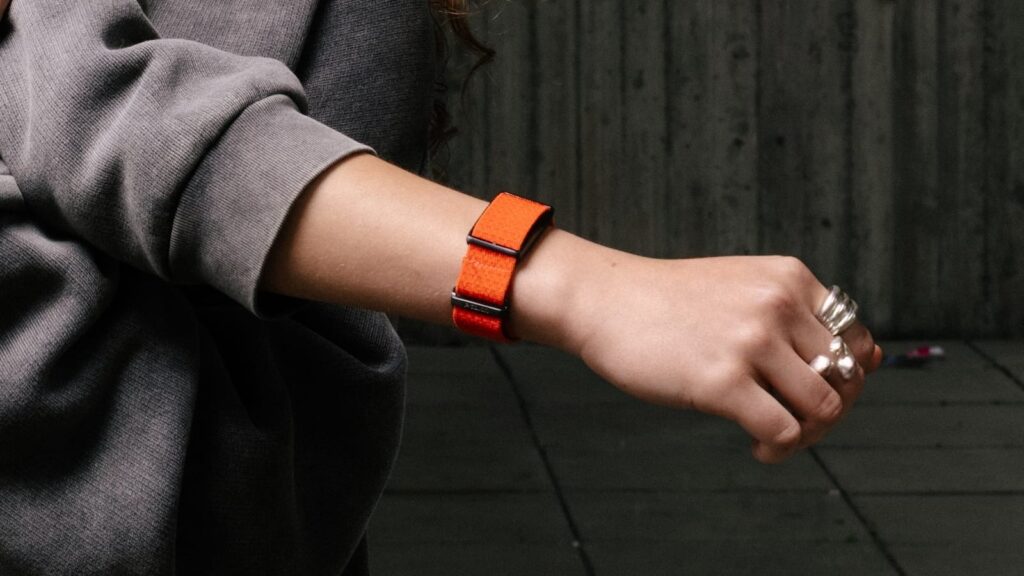
The Garmin Cirqa is a screenless wrist wearable designed for 24/7 passive health tracking—heart rate, sleep, recovery, all the usual stuff. Earlier Garmin Cirqa leaks, including images that briefly popped up on Garmin’s own site before disappearing again, suggested two sizes, two color options (Black and French Gray), and a possible spring launch window. Just enough info to confirm it exists.
The more recent leak—spotted by NotebookCheck via Ukrainian retailer Stylus Store—goes a lot further. It lists the Cirqa with a product image and a price tag of 22,399 UAH (roughly $509), with a preorder discount bringing it closer to $454.
And yes, like NotebookCheck points out, retailer leaks can be messy. Sometimes we can take them for face value, but sometimes it’s just placeholder AI images and someone hitting “publish” too early. So I’m not treating it like gospel, for now.
But still… the number is now out there. And it’s kind of hard to unsee.
WHOOP Alternatives are already everywhere
To understand why $500 feels jarring, you have to understand where this category started. WHOOP basically defined the idea of a screenless fitness tracker—a minimal wrist wearable with no screen, built for athletes who wanted continuous recovery data without the distraction of a smartwatch. It found its audience, built a loyal community, and made “recovery tracking” feel like a legitimate product category rather than a niche obsession.
Others followed. Polar launched the Loop at $199—subscription-free, eight-day battery, 24/7 heart rate —and made a clear statement about pricing accessibility. Amazfit‘s Helio Strap came in at $99, also subscription-free, with 27 sport modes and 10-day battery life. And most recently, Google launched the Fitbit Air at $99, a screenless band with advanced health sensors, AFib detection, and SpO2—also $99— that just went on sale this month.
So this isn’t an emerging category anymore. It’s a competitive one, with pricing expectations already set by multiple real products that real people are already wearing.
The Real Shock Isn’t the Device—It’s the Cost
So what exactly does $500+ get you in a device with no screen?
At $509, the Cirqa wouldn’t just be the most expensive screenless tracker—it would be in a tier of its own. The Fitbit Air and Amazfit Helio Strap both sit at $99. Polar Loop is $199, no subscription. Even Whoop’s top-tier WHOOP Life plan — which includes ECG and blood pressure monitoring—runs $359 a year. And that’s a subscription, not a hardware purchase.
So what does $500 buy you in a device with no screen? The leaked image shows a standard fabric band with a small sensor unit. For five times the price of its closest competitors, the spec sheet is going to need to do some serious justifying.
How Screenless Fitness Trackers Became a Premium Fitness Trend
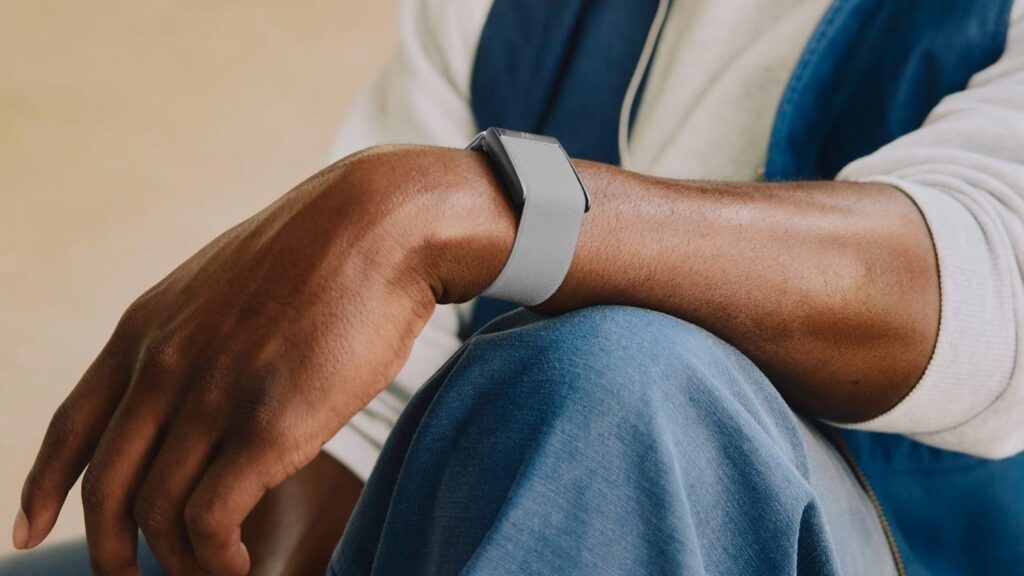
Here’s the weird evolution I can’t stop thinking about. Screenless fitness trackers started as this very clear idea: less is more.
No screen meant no notifications, no dopamine hits from checking your stats 40 times a day. The whole point was that data should sit in the background—available, not demanding.
That simplicity was the product. But somewhere along the way, simplicity got expensive. WHOOP leaned into subscriptions, which turn minimal hardware into a long-term financial commitment. Polar and Amazfit went the opposite direction and basically said: this doesn’t need to cost a fortune at all.
And now Garmin seems to be doing something else entirely—treating screenless design like a premium feature instead of a baseline one. It’s kind of a reversal. The fewer things the device shows you, the more it might cost you. “Simple” is starting to feel a bit luxury-coded, whether intentionally or not.
Why Garmin Still Has a Very Real Advantage
Garmin has roughly 45 million active Garmin Connect users, many with years of health and training data already inside the platform. For them, the Cirqa is a natural add-on. There’s no new app or fresh start here. That lock-in is real, and it doesn’t require winning the whole market.
Final Take: Simplicity, But Make It Expensive
The original idea was simplicity—fewer things distracting you during your run, but still getting those valuable stats at the end of it.
But the Garmin Cirqa leak, especially at around $509, makes it feel like the category is drifting somewhere else entirely. I see it as pricing power dressed as minimalism.
Garmin may still pull this off—but at $500+ for a screenless band, they’ll need to give us something worth looking at…even when there’s nothing to look at.
Lauren has been writing and editing since 2008. She loves working with text and helping writers find their voice. When she’s not typing away at her computer, she cooks and travels with her husband and two kids.