

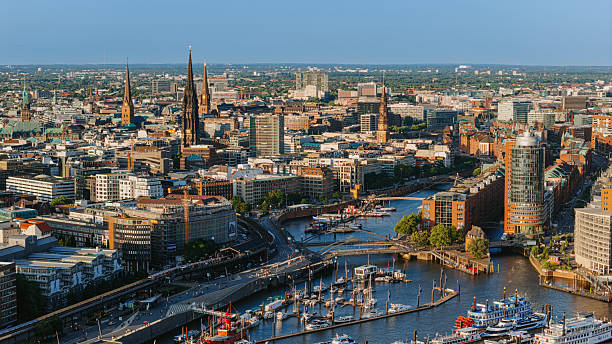
With the largest economy in Europe, the following looks at the fintech, digital and wider economic development of Germany in 2026.
Germany has long been known for engineering excellence, industrial manufacturing and financial stability. Home to Europe’s largest economy (third globally behind the USA and China) and one of the world’s leading export powers, the country has traditionally built its reputation on sectors such as automotive manufacturing, machinery, chemicals, logistics and industrial technology. Today, however, another transformation is underway. Germany is increasingly seeking to modernise its financial sector through fintech, digital payments, open banking and financial innovation.
Unlike some fintech ecosystems that emerged from necessity or financial exclusion, Germany’s fintech evolution is largely being driven by changing consumer expectations, digitalisation pressures and the need to maintain competitiveness within an increasingly technology-driven European economy.
The country’s economic scale provides a powerful foundation. Germany’s gross domestic product (GDP) exceeds $4.5 trillion, while GDP per capita stands above $55,000. Frankfurt remains one of Europe’s most important financial centres, serving as the home of the European Central Bank (ECB) and the Deutsche Bundesbank (the central bank). Alongside Frankfurt, Berlin has emerged as Germany’s leading startup and fintech hub, creating a dual-centre ecosystem where finance and innovation increasingly intersect.

Germany’s wider digital transformation agenda has accelerated in recent years. The Federal Government’s Digital Strategy aims to strengthen digital infrastructure, innovation, artificial intelligence and technology adoption across the economy. Financial services have become an important part of this broader transformation.
Historically, Germany was often perceived as lagging behind some of its European peers in digital payments adoption. Cash remained deeply embedded in consumer behaviour for decades. However, the pandemic accelerated change significantly. According to the Deutsche Bundesbank’s latest payment behaviour surveys, cashless payments now account for the majority of transactions by volume, while mobile and contactless payments continue to grow rapidly.
This shift has created fertile ground for fintech firms.
Germany is now home to one of Europe’s largest fintech ecosystems. According to Germany Finance and the German Fintech Association, the country hosts hundreds of fintech companies operating across payments, digital banking, lending, wealth management, insurtech, regtech and embedded finance.
Perhaps the most internationally recognised German fintech success story is N26, the Berlin-based digital bank that helped redefine mobile-first banking in Europe. Operating across multiple European markets, N26 demonstrated that German fintech companies could scale internationally and compete with traditional banks on customer experience and digital convenience.

Another major player is Trade Republic, which has become one of Europe’s largest investment platforms. By offering commission-free investing and easy-to-use mobile applications, the company has helped broaden retail participation in financial markets across the continent.
The payments sector has also produced significant innovators. Companies such as Ratepay and Unzer have become important players within Germany’s digital commerce and payments infrastructure, while Solaris has emerged as one of Europe’s leading Banking-as-a-Service (BaaS) providers.
The rise of embedded finance has been particularly notable. Increasingly, German fintech firms are enabling non-financial companies to offer banking, lending and payment services directly within customer journeys. This trend mirrors developments occurring across Europe but benefits from Germany’s large small and medium enterprise (SME) sector and sophisticated industrial economy.
Germany’s strong Mittelstand sector, the thousands of small and medium-sized enterprises that form the backbone of the economy, also presents substantial opportunities for fintech innovation. Many fintech providers are increasingly focusing on SME lending, treasury management, invoice financing and digital accounting solutions.
Regulation has played an important role in shaping the market. The Federal Financial Supervisory Authority (BaFin) oversees the country’s financial system and has increasingly engaged with fintech innovation while maintaining Germany’s traditionally robust regulatory standards.
At the European level, Germany is also heavily influenced by frameworks such as PSD2, MiCA, DORA and future open finance initiatives. These regulations create opportunities for innovation while simultaneously raising compliance expectations for fintech firms.
Open banking continues to gain traction throughout the German financial sector. PSD2 has enabled greater data sharing between banks and third-party providers, creating opportunities for new business models in personal finance, lending, payments and account aggregation.

Artificial intelligence is emerging as another major growth driver. Germany’s National AI Strategy seeks to strengthen the country’s position in artificial intelligence research and commercialisation. Within financial services, AI is increasingly being deployed for fraud detection, risk management, customer service automation, compliance monitoring and investment analytics.
The Deutsche Bundesbank and the ECB have also been heavily involved in discussions around the future of digital money. Germany is playing a significant role in the development and evaluation of the proposed digital euro project, which could fundamentally reshape parts of Europe’s payments landscape in the years ahead.
Sustainability is another area where German fintech firms are increasingly active. As Europe’s largest economy pursues ambitious climate objectives, financial institutions and fintech providers are developing solutions focused on ESG reporting, sustainable investing, carbon tracking and green finance.
Challenges nevertheless remain. Germany’s regulatory environment, while trusted and stable, can sometimes be perceived as complex by startups. Competition for talent remains intense, particularly as technology companies, financial institutions and industrial firms increasingly compete for software developers, cybersecurity specialists and AI experts.
Funding conditions have also become more selective since the peak venture capital years of 2021 and 2022. Investors increasingly prioritise profitability and sustainable growth over rapid expansion alone.
Yet Germany retains significant advantages. It combines Europe’s largest economy, a highly skilled workforce, strong industrial capabilities, world-class financial institutions and growing digital adoption. Few countries can match this combination of scale and sophistication.
Ultimately, Germany’s fintech story is not simply about creating the next generation of financial startups. It is about modernising the financial infrastructure that supports one of the world’s most important economies.
For Germany, fintech is becoming an increasingly important bridge between its industrial past and its digital future. As payments, banking, artificial intelligence and embedded finance continue to evolve, the country is positioning itself not only as Europe’s manufacturing powerhouse but also as one of its most influential financial technology markets.