

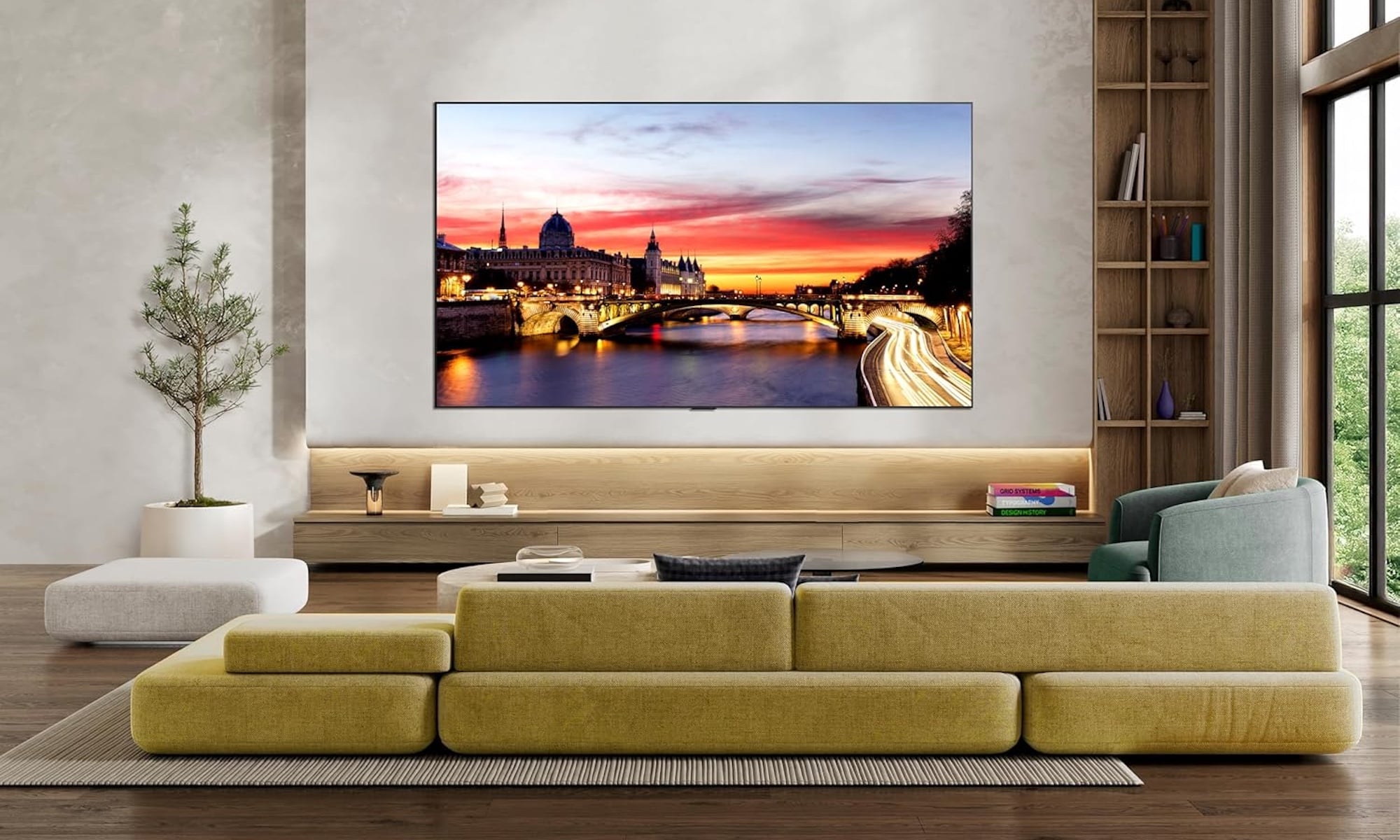

My bedroom is kind of a worst-case test scenario for a TV. It has a south-facing window, no blackout curtains, and I usually leave the bedside lamp on until around midnight. Over the past couple of years, I’ve had both an OLED and a QLED TV in that room, and honestly, the difference was much bigger than I expected. So, is OLED or QLED better for a bedroom TV?
Like most people, I assumed the decision would come down to brightness and picture quality. But after living with both, I realized that where you watch TV matters just as much as the TV tech itself. A bedroom isn’t a living room, and that’s exactly why your priorities are different.
If you’re trying to decide between OLED and QLED for a bedroom TV, here’s what I learned.
My Short Answer
If I were buying a bedroom TV today, I’d choose OLED almost every time.
Bedrooms are where OLED’s biggest strengths really shine. You’re usually watching at night, sitting closer to the screen, or lying in bed at an angle. That’s the environment where OLED’s perfect blacks, incredible contrast, and wide viewing angles make a noticeable difference.
That doesn’t mean QLED is a bad choice. In fact, I’d recommend it without hesitation if your bedroom gets lots of sunlight or you’re working with a tighter budget.
My verdict: For most bedrooms, OLED is worth the extra money. For bright rooms or lower budgets, QLED is the smarter buy.
Why Bedrooms Change the OLED vs QLED Debate
Most comparisons assume you’re shopping for a living room TV. That’s where brightness becomes king because you’re competing with windows, lamps, and sunlight for much of the day.
A bedroom is completely different. Most of us watch TV in the evening while winding down. The lights are dim, the curtains are closed, and we’re usually sitting much closer to the screen than we would in a living room. Half the time, we’re not even looking at the TV head-on—we’re stretched out on the bed with our head on a pillow.
Those conditions play directly into OLED’s strengths.
In a dark room, OLED’s ability to turn individual pixels completely off creates true blacks instead of the dark gray glow you’ll often notice on LED-based TVs. And because OLED doesn’t rely on a traditional backlight, the picture looks almost identical even when you’re watching from an awkward angle.
I honestly don’t think I appreciated those advantages until I moved one into my bedroom. They were far more noticeable there than they ever were in my living room.
Where OLED Won Me Over
Watching TV With the Lights Off
The first thing I noticed after switching to OLED was how much better movies looked at night.
There were moments during fade-to-black scenes when I genuinely thought the TV had turned itself off. It hadn’t—the screen was simply displaying true black. Going back to my QLED afterward made those same scenes look slightly gray, and once I noticed it, I couldn’t stop seeing it.
That’s the biggest advantage of OLED. Every pixel produces its own light, so black pixels simply turn off. Traditional LED and QLED TVs still rely on a backlight, so even their darkest scenes usually have a faint glow behind them.
The LG C6, available in 42-inch and 48-inch sizes that fit comfortably in most bedrooms, is one of the best examples of this. Its perfect blacks and excellent contrast make late-night movie watching feel genuinely cinematic.
My verdict: If you mostly watch TV after dark, OLED delivers a noticeably better picture.
Watching From Bed
I already mentioned that most people watching TV from bed while in the bedroom. And we’re not perfectly centered while doing so. I’m usually lying on my side or leaning against the headboard. Sometimes I’m watching from a pretty sharp angle.With the OLED, the picture barely changed.
The QLED still looked great straight on, but the farther off-center I got, the more I noticed the colors losing some richness and the contrast softening. It wasn’t terrible, but it was noticeable enough that I found myself adjusting my position more often.
My verdict: If you usually watch TV while lying in bed instead of sitting directly in front of the screen, OLED is the clear winner.
Movie Nights Feel More Immersive
I know “infinite contrast” sounds like an ad, but it’s surprisingly easy to appreciate in a bedroom.
Dark scenes have more depth. Bright highlights stand out without washing out the rest of the image. Everything feels a little more cinematic, especially when the room lights are low.
I was impressed by the Sony Bravia 8, which pairs OLED picture quality with Acoustic Surface Audio technology. Instead of hiding speakers underneath the TV, the screen itself produces much of the sound, so dialogue feels like it comes directly from the actors.
When I’d Buy QLED Instead
Despite preferring OLED overall, there are several situations where I’d recommend QLED without a second thought.
Your Bedroom Gets Lots of Sunlight
This is the biggest one. If your bedroom has large south-facing windows or you spend a lot of time watching TV during the afternoon, brightness matters more than perfect blacks.
That’s where QLED really earns its reputation.
The Samsung QN90F Neo QLED gets dramatically brighter than most OLED TVs and does an excellent job reducing reflections. Even in a bright room, the picture stays punchy and easy to see.
If daytime viewing is your priority, I’d take brightness over perfect contrast every time.
My verdict: Bright bedroom? Buy QLED.
You’re Shopping on a Budget
This decision gets much easier once price enters the conversation. If your budget is under about $700, I’d buy a QLED. There simply aren’t many affordable OLED options yet, while excellent Mini-LED QLED TVs get cheaper every year.
The TCL QM7K is a perfect example. It offers Mini-LED local dimming, vibrant quantum dot colors, and Google TV for hundreds less than most OLEDs. Under $500, OLED isn’t really part of the conversation.
My verdict: Budget shoppers get far more value from QLED.
You Want the Biggest Screen Possible
OLED prices climb quickly once you move beyond 55 inches. If you’re hoping for a massive 65- or 75-inch screen without spending several thousand dollars, QLED gives you much better value.
That said, I’d question whether most bedrooms actually need a TV that large. For the average bedroom, I think 48 to 55 inches is the sweet spot.
Should You Actually Worry About OLED Burn-In?
If you’ve spent any time researching OLED TVs, you’ve probably seen plenty of warnings about burn-in. I almost talked myself out of buying one because of it. After digging into the testing and actually living with an OLED, though, I think the concern is overblown—especially for bedroom use.
Modern OLED TVs include pixel shifting, screen refresh cycles, logo detection, and other built-in protections that simply didn’t exist a few years ago. Real-world testing suggests it takes thousands of hours of displaying the same static content before permanent burn-in becomes a serious issue.
That’s just not how most people use a bedroom TV. Mine spends a couple of hours each night streaming different shows before I turn it off. Personally, burn-in wouldn’t stop me from buying another OLED tomorrow.
My verdict: Unless you’re leaving the same news channel or sports ticker on all day, burn-in shouldn’t be a deciding factor.
What I’d Actually Buy
Is OLED or QLED better for a bedroom TV? These are the models I’d recommend; here’s where I’d spend my own money.
Best Bedroom TV Overall (OLED)
LG C6 Series OLED TVs
If I were buying a bedroom TV today, this is the one I’d choose. The 42- and 48-inch sizes are ideal for most bedrooms, and OLED’s perfect blacks and incredible contrast are easiest to appreciate at night. It’s one of those TVs that makes movies feel more immersive without needing to tweak a dozen picture settings.
Best TV for a Bright Bedroom (QLED)
Samsung QN90F Neo QLED
If your bedroom gets lots of sunlight, I’d skip OLED and buy the QN90F instead. It gets incredibly bright, handles reflections far better than most TVs I’ve tested, and still delivers excellent contrast thanks to its Mini-LED backlighting. It’s the TV I’d recommend if you watch as much during the day as you do at night.
Best Value Smart TV (QLED)
TCL QM7K
If you’re trying to keep your budget under control, the TCL QM7K is one of the easiest TVs to recommend. It gives you Mini-LED brightness, vibrant colors, and impressive contrast for far less than a premium OLED. Unless you’re watching movies in a completely dark room every night, I think most people will be thrilled with it.
Best Sound Without a Soundbar (OLED)
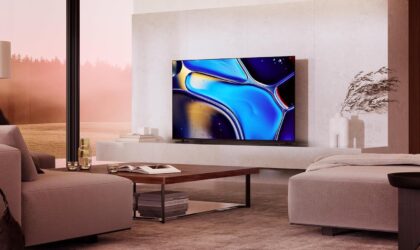
Sony Bravia 8
The Bravia 8 is the TV I’d buy if I wanted a cleaner bedroom setup without adding a soundbar. Sony’s Acoustic Surface Audio makes dialogue sound like it’s comes directly from the screen, which feels surprisingly natural when you’re watching from bed. Pair that with OLED picture quality, and it’s an incredibly immersive TV for movie lovers.
Best Smart TV for Design (QLED)
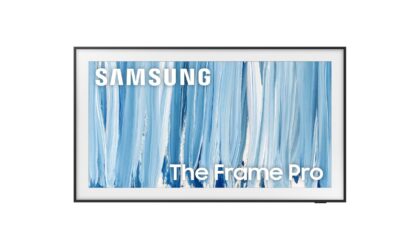
Samsung The Frame
If your bedroom is meant to feel like a relaxing retreat, The Frame is in a class of its own. When you’re not watching TV, it displays artwork that actually blends into the room instead of leaving a giant black rectangle on the wall. You do give up some picture quality compared to OLED, but for the right space, I think that’s a worthwhile tradeoff.
My Final Recommendation
After living with both OLED and QLED in the exact same bedroom, I don’t think this decision is as close as many comparison articles make it sound.
For me, OLED simply fits the way most people use a bedroom TV.
I watch in the evening, often with only a bedside lamp on, and I’m rarely sitting perfectly centered. Every time I switch back to OLED, the deeper blacks, richer contrast, and consistent picture quality immediately stand out. It’s one of the few TV upgrades that I genuinely notice every single night.
That doesn’t mean everyone should buy OLED. If your bedroom is flooded with sunlight, you’re shopping on a tight budget, or your biggest priority is getting the largest screen possible, I’d happily recommend a good QLED instead.
But if you asked me which TV I’d spend my own money on today for a bedroom, my answer would be simple.
I’d buy the OLED.